

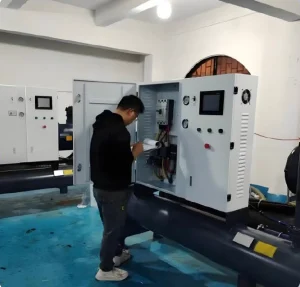
Proper winter chiller maintenance is crucial to prevent freeze damage and ensure reliable operation. Here’s a step-by-step guide:
1. Assess Operational Needs:
Continuous Operation: If the chiller runs year-round (e.g., for process cooling), protect it against freezing temperatures.
Seasonal Shutdown: If not needed, winterize and shut down the system.
2. Continuous Operation Protection:
Maintain Water Flow: Use a chiller bypass valve to circulate water through the evaporator even when cooling isn’t needed.
Set Anti-Freeze Thermostats: Configure controls to run the pump if water temp nears freezing (e.g., 40°F/4°C).
Glycol Solution: Add propylene glycol (typically 30-50% mix) to the chilled water loop. Test concentration annually with a refractometer.
Insulate Exposed Pipes: Wrap pipes, valves, and fittings in cold areas with closed-cell foam insulation.
Verify Freeze Stats: Ensure freeze protection thermostats and alarms are functional.
3. Full Winterization (Shutdown):
Drain ALL Water:
Evaporator, condenser, cooling tower sump, piping, pumps, strainers, and expansion tanks.
Open drain valves and remove drain plugs from low points.
Purge Residual Water:
Blow out pipes with compressed air (≤50 PSI).
Tilt pipes to eliminate pockets.
Cooling Tower Care:
Drain the basin and spray nozzles.
Cover to prevent debris/ice damage.
Protect the Chiller:
Drain evaporator/condenser barrels.
Install desiccant breathers on refrigerant openings.
Pump Maintenance:
Drain volutes and seal chambers.
Remove and store seals if needed.
4. Air-Cooled Chiller Specifics:
Fan Operation: Ensure fans cycle correctly to maintain head pressure.
Coil Protection: Keep coils clean to prevent ice buildup from trapped moisture.
Refrigerant Charge: Verify charge before winter; low charge risks freeze-ups.
5. Glycol System Checks:
Test concentration (target -10°F to -20°F below expected lows).
Check for leaks or degradation.
Ensure compatibility with gaskets/seals.
6. Building Heat:
Maintain ambient temps >40°F (4°C) in chiller rooms.
Use thermostatically controlled heaters if needed.
7. Documentation & Verification:
Log all maintenance steps.
Walk down the system after shutdown to confirm draining.
Label valves/pipes that were winterized.
Critical Risks to Avoid:
Freeze Damage: Ice expands and can crack pipes, heat exchangers, or compressors.
Undrained Water: Even small amounts in U-bends can cause ruptures.
Power Failures: Have backup power or emergency draining plans.
Pro Tip: Schedule maintenance in early fall to avoid cold-weather rushes.