

Food and beverage production uses cooling at many stages, and the required temperature can change dramatically from one process to another. Wineries may need controlled fermentation, cold stabilization and storage cooling, while beverage plants may cool product, process water, tanks or packaging equipment. A winery chiller or beverage chiller should therefore be designed around the production sequence.
Fermentation generates heat as yeast converts sugars. Without adequate cooling, tank temperature can rise beyond the intended profile. Jacketed tanks or external heat exchangers transfer this heat to a chilled-water or glycol loop. The cooling plant must handle simultaneous tank loads while maintaining enough temperature difference for effective heat transfer.
Some wine processes require lower temperatures than normal fermentation cooling. Where circulating fluid approaches or falls below water’s freezing point, a glycol mixture may be needed. Glycol concentration should provide the required freeze protection without being unnecessarily high because concentration affects viscosity and pumping. For equipment options related to this requirement, review Tekin Cooling’s food and beverage cooling solutions for relevant configurations.
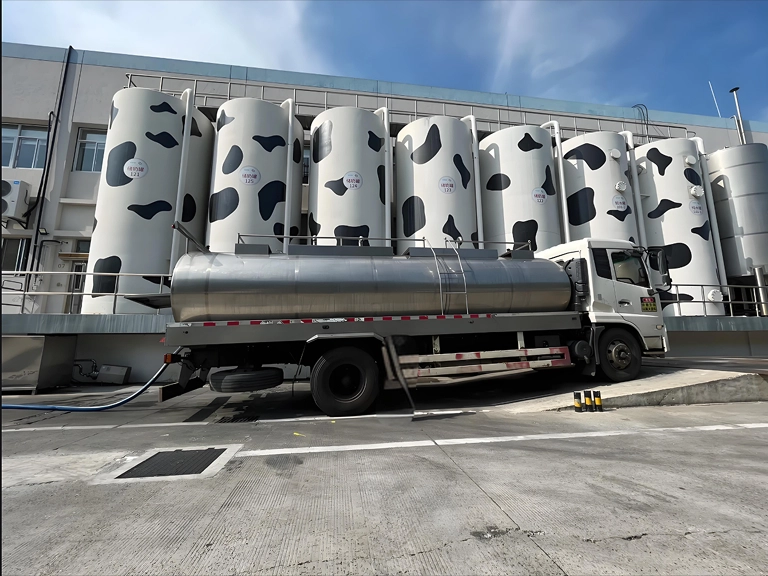
A beverage chiller may support mixing tanks, carbonation equipment, product coolers, syrup preparation, process water or packaging machinery. Each load can have a different schedule. A plant-wide load profile helps determine whether one central system, multiple temperature loops or dedicated chillers provide the best flexibility.
Process product should normally remain separated from the refrigeration circuit through suitable heat exchangers or jacketed vessels. Materials, seals and cleaning procedures must suit the process. The chiller fluid circuit also requires water-quality control to protect pumps and heat exchangers.
Production loads can switch on and off quickly as batches move through the plant. A correctly sized buffer tank adds thermal mass, reduces rapid compressor cycling and helps stabilize supply temperature when several tanks or machines connect to the same loop. For broader project planning, Tekin Cooling’s low-temperature glycol chillers provide additional technical context for system selection.
Wineries and beverage plants often experience seasonal peaks. Equipment selection should consider maximum realistic simultaneous load without excessive oversizing during quieter periods. Modular capacity or staged compressors can help match changing demand. Expansion should be considered if future tanks or lines are planned.
Useful project data includes tank sizes, batch schedules, product temperatures, desired cooling times, supply and return fluid temperatures, glycol concentration, ambient conditions and available electrical power. Where the application requires a connected or alternative cooling approach, see Tekin Cooling’s industrial chiller solutions for related equipment options.
Reliable winery and beverage cooling is a process-control problem as much as a refrigeration problem. When tank loads, temperature profiles, glycol requirements, hygiene boundaries and production schedules are defined clearly, the cooling system can support repeatable production without unnecessary complexity.
Glycol provides freeze protection for low-temperature duties such as cold stabilization.
Sometimes, but different temperature levels may require separate loops or dedicated equipment.
It adds thermal mass, stabilizes temperature and can reduce short compressor cycling.
Not necessarily; circulators are generally smaller precision systems while production chillers can serve larger plant loads.