Pharmaceutical manufacturers cannot evaluate industrial cooling equipment on refrigeration capacity alone. A pharmaceutical chiller must also support predictable production, equipment reliability, temperature monitoring and the facility’s quality-management requirements.
A cooling interruption that might be inconvenient in a general manufacturing plant can have more serious consequences in pharmaceutical production. Depending on the process, unstable cooling may interrupt a validated manufacturing operation, delay a batch or require additional quality assessment before production can continue.
For procurement managers, pharmaceutical engineers and facility teams, the purchasing decision therefore extends beyond selecting a chiller with the correct cooling capacity.
The equipment must be suitable for the manufacturing environment, capable of supporting the required operating conditions and compatible with the site’s maintenance and qualification procedures.
At Tekin Cooling, industrial cooling equipment is available for pharmaceutical and other process applications. Understanding the following seven purchasing requirements can help manufacturers prepare more accurate specifications and compare potential suppliers.
The first purchasing requirement is identifying the specific process that the cooling system will support.
Pharmaceutical facilities often operate multiple systems with different cooling requirements. Production equipment, utility systems and supporting machinery may all require chilled water, but their operational importance and temperature requirements can differ substantially.
For example, a process supporting a temperature-sensitive manufacturing operation may require closer monitoring and more carefully controlled operating conditions than a chiller serving general equipment cooling.
Before requesting quotations, buyers should identify:
The production equipment or utility being cooled.
Whether cooling is required continuously or only during production.
The operating temperature range.
Expected peak and normal cooling loads.
The consequences of a cooling interruption.
Whether the equipment will support a GMP-regulated process.
This information helps establish the appropriate equipment specification and the level of documentation, monitoring and redundancy the facility may require.
Manufacturers evaluating different applications can review Tekin Cooling’s pharmaceutical engineering cooling solutions to understand the types of processes industrial cooling equipment can support.

A pharmaceutical cooling system should be evaluated according to the temperatures it can maintain during normal and demanding operating conditions.
A supplier may advertise precise temperature control, but the actual performance of an installation depends on several factors, including the process load, circulating fluid, heat exchangers, control system and operating environment.
Buyers should distinguish between three specifications:
Temperature range: The minimum and maximum temperatures the equipment can provide.
Temperature stability: How consistently the system can maintain the required operating temperature.
Cooling capacity at the operating point: The amount of heat the equipment can remove at the specified conditions.
These values are related, but they are not interchangeable.
For instance, a chiller may be capable of supplying low-temperature fluid while offering substantially less cooling capacity at that temperature than at a warmer operating point.
Procurement teams should request performance information for their actual operating conditions rather than relying exclusively on nominal capacity figures.
For applications requiring sub-zero fluid temperatures, Tekin Cooling’s low-temperature glycol chiller range provides relevant equipment options. The appropriate configuration must be selected according to the required temperature, cooling duty and fluid conditions.
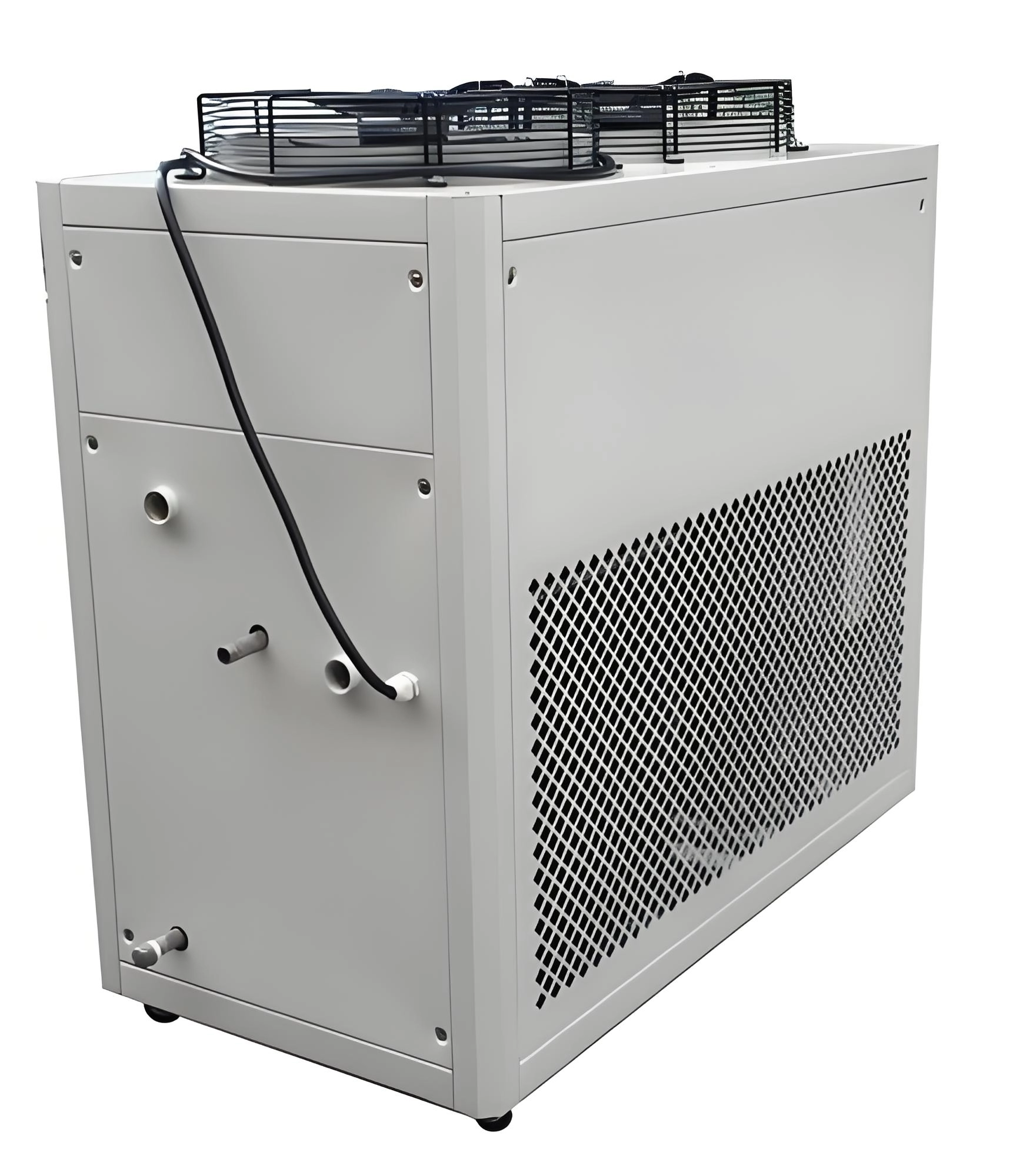
In pharmaceutical manufacturing, cooling-system materials and the arrangement of the process interface can be important purchasing considerations.
Not every cooling application requires sanitary construction. A closed utility chiller serving an external heat exchanger may have different requirements from equipment operating close to a product-contact system.
However, buyers should understand how the cooling fluid is separated from the manufacturing process and what could happen if an equipment failure causes leakage.
Questions worth asking include:
What materials are used in the fluid-contact components?
Are the selected materials compatible with the circulating fluid?
Is the cooling circuit separated from product-contact equipment?
Are appropriate leak-detection or monitoring measures required?
Can the system be drained, inspected and maintained without creating unnecessary contamination risks?
Where glycol is used, the selected fluid type and concentration must also be compatible with the system and the site’s safety requirements.
The objective is not to specify expensive sanitary components for every cooling application. It is to ensure that the chiller’s construction and installation arrangement match the actual process risk.
A pharmaceutical chiller may need to operate as part of a wider facility or production-control system.
In some installations, local temperature displays and alarms may be sufficient. In others, operators may require remote monitoring, alarm signals, operating records or communication with a building management system or production control system.
The required level of integration should be established before equipment selection.
Important considerations include:
| Control requirement | What the buyer should confirm |
|---|---|
| Temperature monitoring | Which temperatures can be measured and displayed? |
| Alarm functions | What happens if temperature, flow or pressure moves outside permitted limits? |
| Remote communication | Can the chiller communicate with the site’s control system? |
| Operating records | Is historical data required, and how will it be retained? |
| Access control | Are different operator permission levels necessary? |
| Recovery behavior | How does the equipment respond after a power interruption or alarm? |
These questions are particularly important where cooling performance forms part of a monitored manufacturing process.
A chiller’s standard controller should not automatically be assumed to meet all pharmaceutical electronic-record or data-integrity requirements. Any additional integration or qualification needs should be confirmed with the supplier.
Cooling-system reliability is especially important when a manufacturing interruption can affect an entire production batch.
However, reliability should not be evaluated only by comparing compressor brands or general equipment specifications.
The facility must consider how the cooling system will operate when maintenance is required or a component becomes unavailable.
Possible arrangements include:
A dedicated chiller serving one critical production system.
Multiple chillers sharing the facility’s cooling load.
Standby equipment available during maintenance or failure.
Separate cooling circuits for processes with different operating requirements.
A pharmaceutical plant does not necessarily need redundant equipment for every cooling application.
The decision should depend on production criticality, the consequences of downtime and the site’s operational risk assessment.
For facilities with multiple cooling loads, centralized industrial chiller systems may be worth evaluating alongside dedicated units. The correct arrangement depends on whether shared cooling infrastructure provides sufficient flexibility and reliability for the manufacturing operation.
One of the most important differences between general industrial equipment purchasing and pharmaceutical equipment procurement is the potential need for formal documentation.
Depending on the intended use and the facility’s quality procedures, the engineering and quality teams may require supporting information for installation, operation and qualification.
Before placing an order, buyers should establish which documents the supplier can provide.
These may include:
Equipment technical specifications and approved drawings.
Electrical diagrams and connection requirements.
Operating and maintenance manuals.
Factory inspection or test documentation.
Instrument information and calibration documentation, where applicable.
Recommended preventive maintenance procedures.
Available spare-parts information.
Some facilities may also require documentation supporting installation qualification (IQ) and operational qualification (OQ).
It is important to distinguish between supplier-provided technical documents and formal GMP qualification.
Purchasing an industrial chiller does not automatically make the installation GMP-compliant. The pharmaceutical manufacturer remains responsible for determining the applicable regulatory requirements and completing the necessary qualification and validation activities.
Buyers should agree on documentation deliverables before ordering, rather than discovering gaps after the equipment arrives.
The lowest initial quotation is not always the most suitable option for a pharmaceutical facility.
Procurement teams should consider the cost of operating, maintaining and supporting the cooling equipment throughout its expected service life.
Important evaluation factors include energy consumption, cooling-water requirements, preventive maintenance, replacement parts, installation conditions and local technical support.
For example, an air-cooled chiller may avoid the need for a cooling tower and associated water-treatment infrastructure. A water-cooled system may be appropriate where the facility already has suitable cooling-water infrastructure and the operating conditions favor that configuration.
Neither arrangement is universally better.
The choice depends on the site’s utilities, operating environment, required cooling capacity and long-term maintenance strategy.
When comparing quotations, buyers should request equipment performance at equivalent operating conditions to ensure that the comparison is meaningful.
Before approving a pharmaceutical cooling system, the engineering and purchasing teams should confirm the following:
| Purchasing checkpoint | Verification required |
|---|---|
| Process suitability | Cooling application and criticality clearly defined |
| Cooling performance | Capacity confirmed at actual operating temperatures |
| Fluid compatibility | Suitable fluid and material specifications |
| Control requirements | Required monitoring, alarms and communication established |
| Reliability | Maintenance and backup requirements evaluated |
| Documentation | Technical and qualification-support documents agreed |
| Site compatibility | Power, space, ambient conditions and utilities confirmed |
| Supplier support | Warranty, spare parts and technical assistance reviewed |
This checklist can also help compare proposals from multiple industrial chiller manufacturers using consistent criteria.
Pharmaceutical manufacturers need cooling equipment that fits the operating requirements of their facilities rather than relying on a single standard configuration.
Tekin Cooling supplies industrial refrigeration equipment for applications involving process cooling, low-temperature operation and temperature-controlled production equipment.
Its product portfolio includes industrial chillers, low-temperature glycol systems and temperature control units that can be evaluated for different pharmaceutical applications.
For projects involving equipment that requires both heating and cooling, Tekin Cooling also offers TCU temperature control equipment with configurations intended for applications such as reactors, fermentation and other controlled processes.
The appropriate selection should be based on the required operating conditions, process integration and any project-specific monitoring or documentation requirements.
By sharing these requirements during the quotation stage, pharmaceutical buyers can obtain a more relevant technical proposal and reduce the risk of purchasing equipment that does not fit the intended installation.
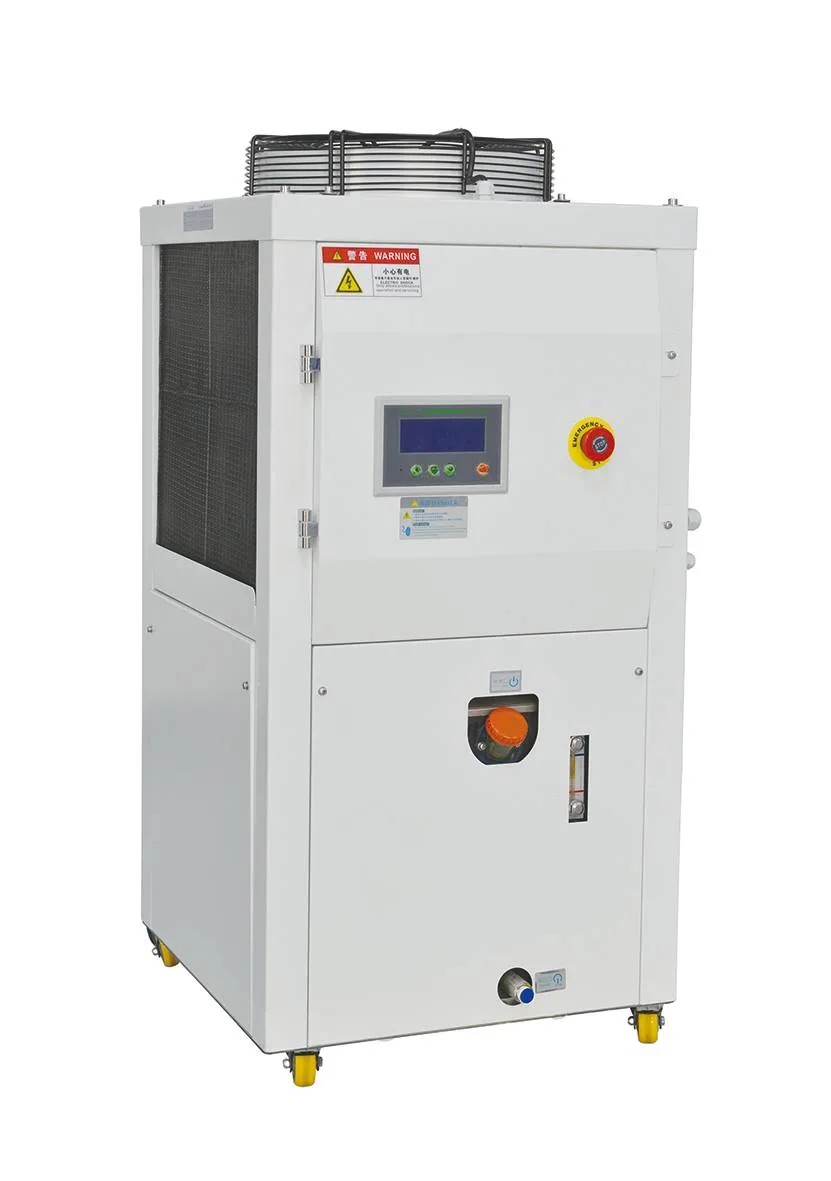
A pharmaceutical chiller is an industrial cooling system used to remove heat from manufacturing equipment, process utilities or temperature-controlled operations within pharmaceutical facilities. Its specifications depend on the intended application and operating requirements.
There is no universal GMP certification that automatically makes every industrial chiller suitable for every pharmaceutical application. The applicable requirements depend on the equipment’s intended use, the facility’s quality system and relevant regulations. Qualification and supporting documentation may be required.
The underlying refrigeration technology may be similar. Pharmaceutical applications can impose additional requirements relating to process criticality, monitoring, documentation, fluid compatibility and qualification.
Both may be suitable. The choice depends on cooling capacity, available utilities, site conditions, operating efficiency and maintenance requirements.
Provide the cooling application, required capacity, fluid temperatures, operating schedule, site conditions, available utilities and any special monitoring, documentation or qualification requirements.
Selecting cooling equipment for pharmaceutical manufacturing requires careful consideration of production reliability, temperature performance, documentation and long-term operating requirements.
Whether you are developing a new pharmaceutical production facility, expanding existing manufacturing capacity or replacing aging cooling equipment, Tekin Cooling can help evaluate suitable industrial cooling options for your project.
Contact Tekin Cooling to discuss your pharmaceutical cooling requirements and request a quotation.