

Rubber extrusion manufacturers rely on consistent production conditions to maintain product dimensions, surface quality and throughput. Whether producing automotive sealing profiles, industrial hoses, rubber tubing or weatherstrips, variations in cooling conditions can create difficulties during downstream handling and finishing.
For production managers, an unreliable cooling-water supply may mean slower line speeds, unstable product dimensions or additional adjustments between production runs.
An appropriately selected rubber extrusion chiller can help maintain the required cooling-water conditions for compatible process equipment. However, choosing the right system involves more than matching the chiller’s advertised capacity to the extrusion machine.
Buyers must consider where cooling is needed, how the load changes during production and whether the equipment can operate reliably alongside the extrusion line.
This guide explains the practical factors rubber manufacturers should evaluate before investing in an industrial chiller.
Not every rubber extrusion line uses cooling in the same way.
The cooling arrangement depends on the rubber compound, extrusion equipment, curing method and final product.
A manufacturer producing continuous automotive weatherstrips may have different requirements from a factory making industrial rubber hoses or large sealing profiles.
Three common cooling applications deserve attention.
During extrusion, mechanical work and friction generate heat. Depending on the extruder design, temperature-control circuits may be used to manage specific machine zones.
An industrial chiller can supply cooling water to suitable equipment circuits, often through a temperature-control arrangement.
However, the cooling-water supply temperature should not be confused with the required barrel temperature. A separate control unit may be needed to regulate the actual process temperature.
After extrusion and, where applicable, vulcanization, rubber products may pass through cooling troughs, spray sections or other cooling equipment.
These systems help bring the product toward the temperature required for subsequent handling, cutting or packaging.
Cooling conditions must be appropriate for the compound and product geometry. Excessively aggressive cooling is not necessarily beneficial, particularly where it creates unwanted temperature gradients.
Certain production lines also require cooling for hydraulic systems, drives or other supporting equipment.
These loads may operate at different temperatures from the product-cooling circuit.
Identifying each cooling application separately helps buyers avoid connecting equipment with incompatible requirements to a single uncontrolled water supply.
Tekin Cooling’s plastic and rubber industrial cooling solutions cover extrusion and other polymer-processing applications.
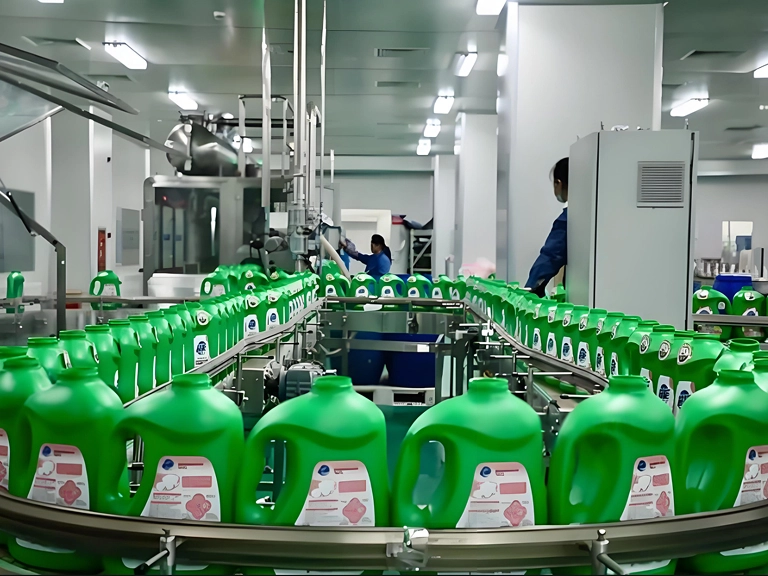
The correct cooling-water temperature is determined by the product and manufacturing process—not by a universal setting.
For example, rubber profiles with thick sections may require a different cooling approach from thin sealing strips. Compound formulation, curing conditions and line speed also influence the appropriate cooling arrangement.
If cooling is insufficient, a product may remain too warm for stable downstream handling. In some processes, this can contribute to deformation or difficulties maintaining dimensions.
Conversely, cooling too rapidly can create unwanted temperature differences between the surface and interior of the product.
Industry references describe rubber extrusion cooling-water conditions across relatively broad ranges, reinforcing the importance of selecting the temperature for the specific application.
Before specifying a chiller, manufacturers should establish:
The required water temperature at the actual process equipment.
Acceptable temperature variation during continuous production.
Cooling-water flow requirements.
Product temperature entering and leaving the cooling stage.
Expected changes when switching compounds or production speeds.
The chiller should then be selected to support those operating conditions.
A common purchasing mistake is selecting an industrial chiller based only on extruder size or motor power.
These figures may be useful background information, but they do not directly establish the total cooling requirement.
The cooling load depends on how much heat must be removed from the process water and how quickly that heat is transferred.
For a circulating water system, a basic heat-load estimate can be expressed as:
Where:
\(Q\) is the cooling load in kW.
\(\dot{m}\) is the water mass flow rate in kg/s.
\(c_p\) is the specific heat capacity of water in kJ/(kg·°C).
\(\Delta T\) is the temperature difference between return and supply water in °C.
For water, a practical approximation is:
Here, \(F\) is the water flow in m³/h.
Suppose an extrusion line requires 8 m³/h of cooling water, with a return-water temperature of 25°C and a supply-water temperature of 20°C.
ILLUSTRATIVE COOLING-LOAD ESTIMATE
Water flow
Temperature difference
Calculated load
This is a hypothetical example, not a measured Tekin installation or a final chiller-sizing recommendation.
The calculated figure represents the heat removed under the stated conditions.
Actual equipment selection must also account for peak loads, site conditions, piping losses, fluid properties and the manufacturer’s rated capacity at the required operating point.
Where the system uses a glycol mixture rather than water, the calculation must use the appropriate fluid properties.
Rubber manufacturers operating several extrusion lines must decide whether to install individual chillers or connect multiple machines to a common cooling system.
Neither arrangement is automatically superior.
A dedicated chiller may be appropriate when a production line has distinct operating requirements or when independent temperature control is important.
Potential advantages include easier isolation during maintenance and less interaction between production lines.
However, several individual units can increase the number of machines requiring servicing and monitoring.
A centralized system can distribute cooling water to several production areas.
This arrangement may suit factories with multiple lines operating at compatible water temperatures.
However, it requires careful consideration of flow distribution, controls and production continuity.
If one extrusion line has a substantially different cooling requirement, it may need a separate temperature-control circuit or heat exchanger.
Manufacturers considering a shared plant can review Tekin Cooling’s discussion of industrial chiller systems and cooling towers when evaluating plant-wide cooling infrastructure.

A technically suitable cooling system should support the factory’s real production conditions rather than simply matching a catalogue description.
The following questions can make supplier comparisons more useful.
A cooling system should be assessed against the highest realistic operating load, not only average demand.
Ask the supplier to confirm cooling capacity at the required leaving-water temperature and expected ambient or condenser-water conditions.
Rubber manufacturers may introduce new compounds, increase line speed or install additional equipment.
Where expansion is planned, the cooling design should account for the expected future load without automatically oversizing the initial installation.
Confirm flow rates, operating pressure, connection sizes and water-quality requirements.
Where process water may contain particles or other contaminants, filtration and suitable circuit separation should be evaluated.
A cooling interruption can affect production continuity.
Buyers should evaluate alarms, maintenance access, available spare parts and whether standby cooling is justified by the cost of downtime.
A useful quotation should explain the proposed cooling capacity, operating conditions, electrical requirements, equipment dimensions and installation needs.
This makes it easier to compare equipment from different manufacturers.
Both air-cooled and water-cooled chillers can be used for industrial process cooling, depending on the application.
The right choice depends on factory infrastructure and operating conditions.
| Purchasing consideration | Air-cooled chiller | Water-cooled chiller |
|---|---|---|
| Heat rejection | Uses ambient air | Uses a condenser-water system |
| Cooling tower | Generally not required | Typically required |
| Installation | Often simpler where outdoor airflow is available | Requires suitable cooling-water infrastructure |
| Performance factors | Strongly influenced by ambient temperature | Influenced by condenser-water temperature and system design |
| Maintenance | Air-side coil cleaning and refrigeration servicing | Chiller servicing plus water-system maintenance |
| Typical evaluation | Sites seeking simpler heat-rejection infrastructure | Plants with suitable existing water systems or larger centralized cooling requirements |
For smaller independent extrusion lines, an air-cooled unit may be practical where the site has adequate installation space and airflow.
For larger facilities, water-cooled equipment may be worth evaluating where appropriate cooling-water infrastructure already exists.
The final decision should consider actual operating costs, not only purchase price.
Not every production issue requires replacing the chiller.
However, certain recurring problems suggest that the cooling system deserves a closer technical assessment.
Cooling-water temperature rises during long production runs
The existing system may not be removing heat quickly enough under sustained load. Check actual water flow, heat rejection, fouling and chiller capacity.
Product dimensions become less consistent as the shift progresses
Investigate cooling conditions alongside compound variation, tooling, line speed and curing conditions rather than assuming the chiller is the sole cause.
Water flow or pressure varies between production lines
Distribution-system restrictions, pump selection or changes in simultaneous demand may require attention.
Maintenance interruptions are becoming more frequent
Review equipment condition, maintenance history and whether the existing installation still matches current production requirements.
A performance assessment should compare measured operating conditions with the original equipment specifications before a replacement decision is made.
Providing a complete request for quotation (RFQ) helps cooling-equipment suppliers recommend a suitable system.
| Required information | Details to provide |
|---|---|
| Product type | Rubber hoses, seals, profiles, tubing or other products |
| Cooling application | Barrel circuit, downstream trough, auxiliary equipment or multiple uses |
| Production arrangement | Number of lines and operating schedule |
| Water temperatures | Required supply and expected return temperatures |
| Flow rate | Required flow for each circuit |
| Cooling load | Measured or estimated peak demand |
| Site conditions | Ambient temperature, electrical supply and installation space |
| Existing utilities | Cooling tower, chilled-water network or other available infrastructure |
| Future requirements | Planned expansion or changes in production |
| Operational priorities | Maintenance access, monitoring, alarms and backup requirements |
Where actual measurements are unavailable, the equipment supplier may need additional information from the extrusion-machine manufacturer or plant engineering team.
The more accurately the process is described, the more useful the technical proposal will be.
Tekin Cooling supplies industrial cooling equipment for manufacturing applications, including polymer processing.
Its plastic industrial solutions specifically address extrusion, rubber processing and other production environments where stable temperature control is important.
For rubber extrusion projects, the equipment-selection process should begin with the actual cooling load, required water temperature, circulation conditions and available factory utilities.
Tekin Cooling can then evaluate suitable industrial chiller configurations against the supplied project requirements.
Whether a manufacturer needs cooling for a new extrusion line, an existing water circuit or a wider factory expansion, a clearly defined specification helps establish an appropriate starting point for equipment selection.
A rubber extrusion chiller is an industrial refrigeration system used to provide cooling water for compatible extrusion equipment, downstream cooling systems or auxiliary machinery.
There is no single correct temperature for every rubber extrusion line. The requirement depends on the rubber compound, product geometry, curing process and cooling arrangement. The extrusion-equipment supplier or process engineer should establish the appropriate temperature.
Yes, where the combined cooling capacity, water-flow requirements and operating temperatures are compatible. Separate temperature-control circuits may be necessary for equipment with different requirements.
An air-cooled chiller may be suitable where it can meet the cooling load and operating-temperature requirements under the site’s ambient conditions.
Sizing should be based on the actual heat load, water-flow requirements, supply and return temperatures, operating conditions and appropriate design allowances—not extruder motor power alone.
If your factory is installing a new rubber extrusion line, expanding production or reviewing an unreliable cooling-water system, the right starting point is a clear understanding of your process requirements.
Tekin Cooling can evaluate industrial chiller options based on your cooling load, operating temperatures, factory conditions and production arrangement.
Contact Tekin Cooling at info@tekincooling.com to discuss your rubber extrusion cooling requirements and request an equipment quotation.