In chemical and petrochemical manufacturing, reactor temperature affects more than production efficiency. It can influence reaction rates, product consistency, batch completion times and the safe operation of processing equipment.
For plant managers and procurement teams, selecting a suitable reactor cooling system means understanding how cooling equipment will perform throughout the production cycle—not simply comparing the nominal capacity of different industrial chillers.
Some reactors require continuous heat removal during exothermic reactions. Others need controlled cooling after heating, while certain processes involve repeated heating and cooling stages. Each situation creates different requirements for cooling capacity, temperature stability and equipment integration.
At Tekin Cooling, we provide industrial cooling equipment for a range of process applications, including chemical manufacturing, low-temperature cooling and reactor temperature control.
This guide explains the practical considerations chemical and petrochemical buyers should evaluate before selecting a reactor cooling chiller or integrated temperature control system.
Not every chemical reactor operates under the same thermal conditions.
A mixing vessel may require moderate cooling to maintain product viscosity. A polymerization reactor may generate substantial heat during specific stages of the reaction. A batch reactor may need to transition between heating, holding and cooling according to a defined temperature profile.
These differences affect the selection of the cooling system.
For example, a reactor that generates a short but intense heat load may require a different cooling arrangement from one operating at a relatively constant temperature for 24 hours.
Buyers should consider three questions:
How much heat must be removed during the most demanding stage of production?
What temperature must the reactor maintain, and how quickly must it change?
What happens to the production process if cooling performance is interrupted?
Answering these questions helps establish whether the facility needs a dedicated reactor chiller, a centralized chilled-water system, or a combination of refrigeration and local temperature control equipment.
A chemical reactor chiller and a temperature control unit serve related but different functions.
An industrial chiller provides cooling capacity by removing heat from a circulating fluid. The chilled fluid can then transfer heat away from a reactor jacket, heat exchanger or another process component.
A temperature control unit (TCU) manages the temperature delivered to the process. Depending on the configuration, it may provide heating, cooling or both.
For reactors that follow programmed temperature cycles, local temperature control can be particularly valuable.
A dedicated chiller may be appropriate when:
The reactor requires a relatively consistent cooling-water temperature.
One production line needs independent cooling capacity.
The facility wants to separate reactor cooling from other utility loads.
Cooling demand can be met without a complex heating-and-cooling sequence.
A temperature control unit may be more suitable when:
The process alternates between heating and cooling.
Reactor temperature must follow a defined batch profile.
Different reactors require independent temperature setpoints.
Localized temperature control is important for repeatable processing.
Tekin Cooling offers TCU temperature control equipment designed for applications including glass reactors, metal reactors and other processes requiring controlled heating and cooling.
For larger facilities, a central chiller can also supply cooling to multiple temperature control units, subject to the required temperature levels and system design.
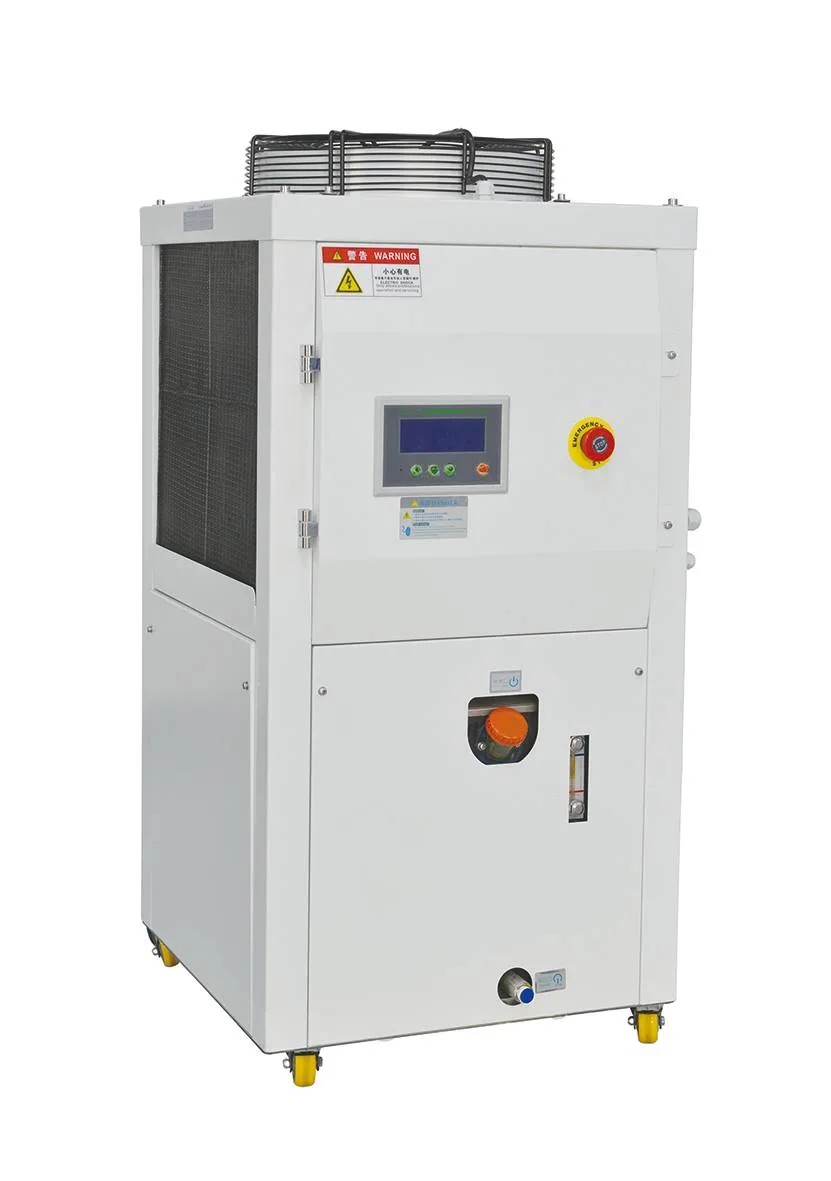
Certain chemical processes require temperatures below the practical operating range of conventional chilled-water systems.
Examples may include low-temperature synthesis, crystallization, solvent condensation and selected specialty chemical production processes.
In these situations, a glycol-based cooling system can provide freeze protection while transferring heat between the chiller and the process equipment.
However, the required operating temperature is only one part of the selection process.
A plant purchasing a low-temperature reactor chiller should also evaluate the cooling capacity available at its actual operating temperature. A chiller’s rated capacity at a relatively warm condition may be considerably higher than its capacity at a sub-zero operating point.
Fluid concentration, pumping requirements, heat-exchanger design and process compatibility also influence the final equipment specification.
Tekin Cooling’s low-temperature glycol chillers include configurations intended for demanding industrial applications requiring sub-zero cooling.
The appropriate model should be selected against the required cooling duty, fluid temperature and operating conditions rather than the minimum advertised temperature alone.
A useful quotation should allow the supplier to evaluate the actual process rather than simply recommend equipment based on reactor size.
The following information helps establish a more reliable specification.
| Requirement | Information to provide | Why it matters |
|---|---|---|
| Reactor application | Reaction, mixing, condensation, crystallization or other process | Establishes the operating duty |
| Cooling load | Required kW or estimated process heat load | Determines refrigeration capacity |
| Temperature range | Minimum, maximum and normal operating temperatures | Guides equipment configuration |
| Cooling profile | Continuous, batch or variable operation | Helps evaluate load changes |
| Cooling medium | Water, glycol mixture or other permitted fluid | Affects heat transfer and materials |
| Reactor arrangement | Jacket, coil or external heat exchanger | Influences circulation and integration |
| Site conditions | Ambient temperature, available power and cooling-water infrastructure | Determines installation suitability |
| Operational requirements | Redundancy, alarms and monitoring needs | Supports production continuity |
For processes involving flammable substances or hazardous areas, buyers should also identify the applicable site classification and safety requirements. Suitable equipment certification, placement and isolation must be confirmed for the specific installation; a standard industrial chiller should not be assumed suitable for installation in a hazardous area.
Providing this information early reduces the risk of selecting equipment that meets a nominal capacity requirement but does not perform adequately under actual production conditions.
Facilities operating several reactors face another important decision: whether to use a centralized cooling system or install separate chillers for individual production lines.
A centralized system can simplify the provision of chilled fluid across a facility, particularly where several reactors have similar operating temperatures.
It may also allow plant operators to coordinate cooling capacity across multiple users.
However, centralized cooling introduces shared-system dependencies. A failure in a common utility system can affect several production areas unless suitable redundancy or backup arrangements are provided.
Individual reactor chillers offer a different advantage: greater separation between process lines.
They can be useful when reactors operate at significantly different temperatures, production schedules vary, or individual processes need independent control.
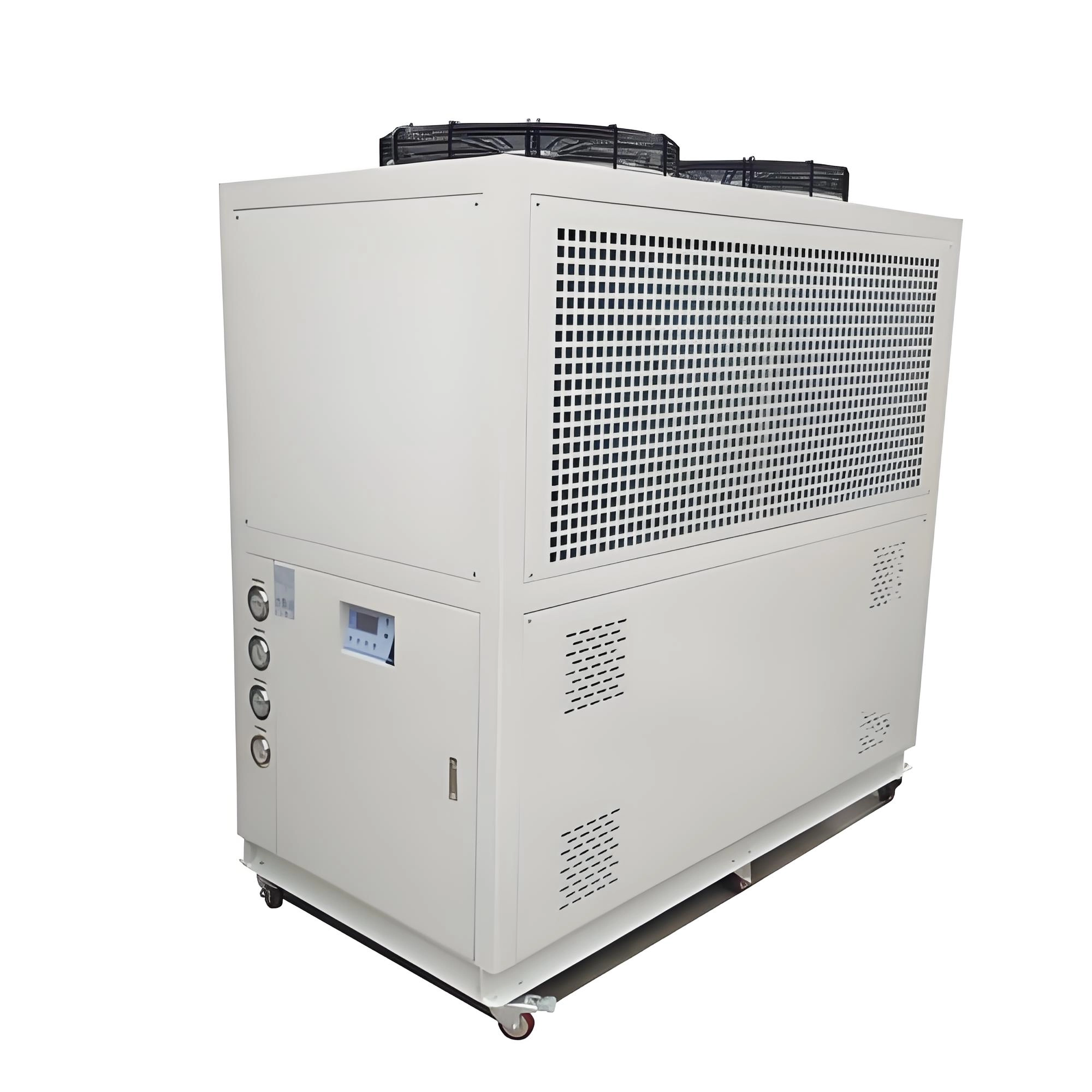
For facilities considering a larger centralized arrangement, Tekin Cooling’s industrial chiller product range provides options for evaluating different cooling capacities and system configurations.
The final choice should reflect the plant’s production layout, operating schedule, cooling requirements and tolerance for downtime.
Two reactors of the same size can generate very different cooling loads.
Reaction chemistry, batch duration, operating temperature and heat-transfer conditions all affect the required cooling duty.
Reactor volume is useful background information, but it is not a substitute for a proper thermal-load assessment.
A chemical process may require high cooling capacity during one stage and relatively little during another.
A system selected only for peak capacity may operate inefficiently at lower loads if its control and capacity-modulation characteristics are unsuitable.
Buyers should discuss the full production cycle with the supplier, including peak loads, normal operating conditions and minimum loads.
Even a correctly sized chiller may deliver disappointing results if the circulation system, heat exchanger, piping or controls are poorly matched to the reactor.
Before purchasing, buyers should confirm the required fluid flow, pressure limitations, control interface and installation arrangement.
This is especially important when replacing an existing reactor cooling system while retaining older process equipment.
Chemical and petrochemical facilities often require cooling solutions that are selected around specific operating conditions rather than a standard equipment description.
Tekin Cooling’s industrial refrigeration portfolio includes low-temperature glycol chillers, industrial chillers and temperature control equipment that can be evaluated for different reactor applications.
Our approach begins with understanding the customer’s process requirements, including cooling capacity, operating temperature, site conditions and equipment integration.
For applications involving repeated heating and cooling, temperature control equipment can be evaluated alongside the refrigeration system. For sub-zero duties, glycol chiller configurations may be considered based on the required operating point.
Facilities planning a new installation or upgrading existing equipment can explore our chemical industrial cooling solutions to understand the broader applications of industrial process cooling.
The objective is to help buyers identify equipment suitable for their production requirements while considering operating reliability, temperature control and long-term maintenance.
The appropriate chiller depends on the reactor’s cooling load, operating temperature, cooling medium and production cycle. Standard industrial chillers may suit moderate-temperature applications, while low-temperature glycol chillers may be required for sub-zero duties. Processes requiring both heating and cooling may also benefit from a temperature control unit.
Yes, a centralized chiller can supply multiple reactors when its capacity, temperature range, circulation system and control arrangement are suitable. Reactors requiring different temperature setpoints may need individual control loops or additional temperature control equipment.
Reactor cooling focuses on removing heat from the process. Reactor temperature control involves maintaining or changing the process temperature according to operating requirements and may include both heating and cooling.
No. Glycol cooling is generally considered when freeze protection or lower fluid temperatures are required. For applications operating at suitable temperatures above freezing, a conventional water-based cooling system may be appropriate.
Provide the reactor application, required cooling capacity, temperature range, operating cycle, cooling medium, electrical supply, ambient conditions and any special integration or safety requirements. These details help the supplier evaluate suitable equipment.
Whether you are planning a new chemical production line, upgrading an existing reactor cooling system or evaluating a low-temperature process application, selecting the right equipment begins with understanding the actual operating requirements.
Tekin Cooling can help review your cooling requirements and identify suitable industrial chiller or temperature control equipment for your project.
Contact Tekin Cooling to discuss your reactor cooling application and request a quotation.