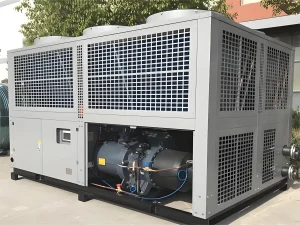

Low-pressure alarms in chillers indicate refrigerant pressure in the evaporator has dropped below safe thresholds, risking compressor damage. Below is a structured breakdown of causes, diagnostics, and solutions:
❄️ Top Causes of Low-Pressure Alarms
-
Refrigerant Shortage
-
Leaks (most common): In evaporator coils, valves, joints, or schrader cores.
-
Inadequate Charge: Underfilled during maintenance.
-
-
Evaporator Issues
-
Low Water Flow: Clogged strainers, failing pumps, closed valves, or air-bound pipes.
-
Fouled Tubes: Scale/slime buildup reducing heat transfer.
-
Low Load: Demand drops below chiller’s minimum capacity (e.g., at night/winter).
-
-
Component Failures
-
Stuck/Defective Expansion Valve: Restricts refrigerant flow into evaporator.
-
Clogged Filter-Drier: Blocks refrigerant movement.
-
Faulty Pressure Transducer: False readings triggering alarms.
-
-
Cold Weather Effects
-
Low Ambient Temps: Oversized chillers struggle to maintain pressure in winter.
-
Refrigerant Migration: Liquid refrigerant pools in cold condenser, starving evaporator.
-
-
Control Problems
-
Incorrect Chiller Setpoints: Overly aggressive suction pressure targets.
-
Failed Unloaders: Compressor unable to reduce capacity.
-
🛠️ Troubleshooting Steps
| Symptom | Diagnostic Checks | Solutions |
|---|---|---|
| Refrigerant leak | • Check oil spots, hissing sounds • Use electronic leak detector • Measure subcooling/superheat |
• Repair leak • Recharge to OEM specs |
| Low water flow | • Verify pump operation • Inspect strainers/valves • Check ΔP across evaporator |
• Clean strainers/pipes • Bleed air • Adjust VFDs |
| Fouled evaporator | High ΔT (>10°F/5.5°C) water in/out | • Chemically clean tubes • Improve water treatment |
| Expansion valve failure | Frost on valve body • Low superheat |
• Replace valve • Adjust superheat (typically 8-12°F) |
| Winter operation issues | Pressure drop during cold snaps | • Install suction accumulator • Use crankcase heater • Lower condenser fan speed |
⚠️ Critical Risks of Ignoring Low-Pressure Alarms
-
Compressor Destruction: Low pressure → low refrigerant density → insufficient oil return → bearing seizure.
-
Floodback: Liquid refrigerant slugs into compressor, causing hydraulic shock.
-
Coil Freezing: Evaporator temperatures drop below 32°F (0°C), freezing water inside tubes.
❄️ Winter-Specific Fixes
-
Head Pressure Control:
-
Use fan cycling or variable speed drives to maintain condenser pressure.
-
-
Crankcase Heaters:
-
Prevent refrigerant migration into compressor oil during shutdown.
-
-
Suction Line Accumulators:
-
Capture liquid refrigerant before reaching compressor.
-
🔧 Preventive Measures
-
Weekly Checks: Log suction pressure, superheat, water ΔT.
-
Leak Tests: Quarterly electronic leak detection.
-
Water Treatment: Monthly testing to prevent scaling/biofilms.
-
Calibration: Verify pressure sensors annually.