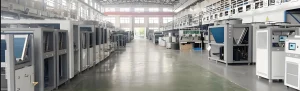

Air-cooled chillers trigger high-pressure alarms when the refrigerant pressure in the condenser exceeds safe limits. This critical safety feature prevents equipment damage (e.g., compressor failure, burst pipes). Below are the primary causes and troubleshooting steps:
🔥 Top Causes of High-Pressure Alarms
-
Insufficient Heat Rejection:
-
Clogged Condenser Coils: Dirt, dust, leaves, or frost blocking airflow.
-
Low Ambient Airflow: Faulty fans, damaged fan blades, or failed motors.
-
High Ambient Temperature: Operating in hot environments (>115°F/46°C) reduces heat dissipation.
-
-
Refrigerant Issues:
-
Overcharge: Excess refrigerant floods the condenser, raising pressure.
-
Non-Condensables (Air/Moisture): Air pockets or humidity trapped in the system increase head pressure.
-
-
System Blockages:
-
Restricted Liquid Line: Clogged filter-dryers, kinked pipes, or stuck valves.
-
Fouled Condenser Tubes: Oil buildup or debris hindering heat transfer.
-
-
Control Failures:
-
Faulty Fan Controls: Stuck relays, broken VFDs, or misconfigured staging.
-
Defective High-Pressure Switch: False alarms due to sensor drift.
-
-
Cold Weather Risks (Winter-Specific):
-
Condenser Flooding: Low load causes refrigerant to accumulate in the condenser, reducing effective surface area.
-
Frost Accumulation: Ice blocking coils in humid conditions.
-
🛠️ Troubleshooting & Solutions
| Symptom | Diagnosis | Fix |
|---|---|---|
| Dirty condenser coils | Reduced airflow; high ΔT across coils | Clean coils with fin combs/low-pressure water. Improve maintenance schedule. |
| Fan failure | One/more fans not spinning | Replace motors, check wiring/VFDs, verify voltage. |
| Refrigerant overcharge | High subcooling; sight glass full | Recover excess refrigerant; verify charge per manufacturer specs. |
| Non-condensables present | Disproportionate high-side pressure vs. temp | Evacuate and recharge the system. Fix leaks first. |
| Blocked filter-drier | High pressure drop across drier | Replace filter-drier; check for debris in expansion valve. |
| Low ambient fan control fail | Pressure spikes in cool weather | Adjust fan cycling settings; install head pressure control valves. |
❄️ Cold Weather Best Practices
-
Head Pressure Control:
-
Use fan speed controllers or fan cycling to maintain minimum pressure (typically 120-180 PSIG).
-
Install flooded condenser valves to artificially increase pressure in low temps.
-
-
Frost Prevention:
-
Ensure defrost cycles activate (if equipped).
-
Position chillers away from snowdrifts/ice-prone areas.
-
⚠️ Critical Risks if Ignored
-
Compressor Damage: High pressure strains bearings, valves, and motor windings.
-
Emergency Shutdowns: Unplanned downtime affecting operations.
-
Refrigerant Leaks: Burst pipes or ruptured coils.